
Buckingham Nicks—Buckingham Nicks
Out of print for years, the first album from Lindsey Buckingham and Stevie Nicks gets a long overdue reissue.
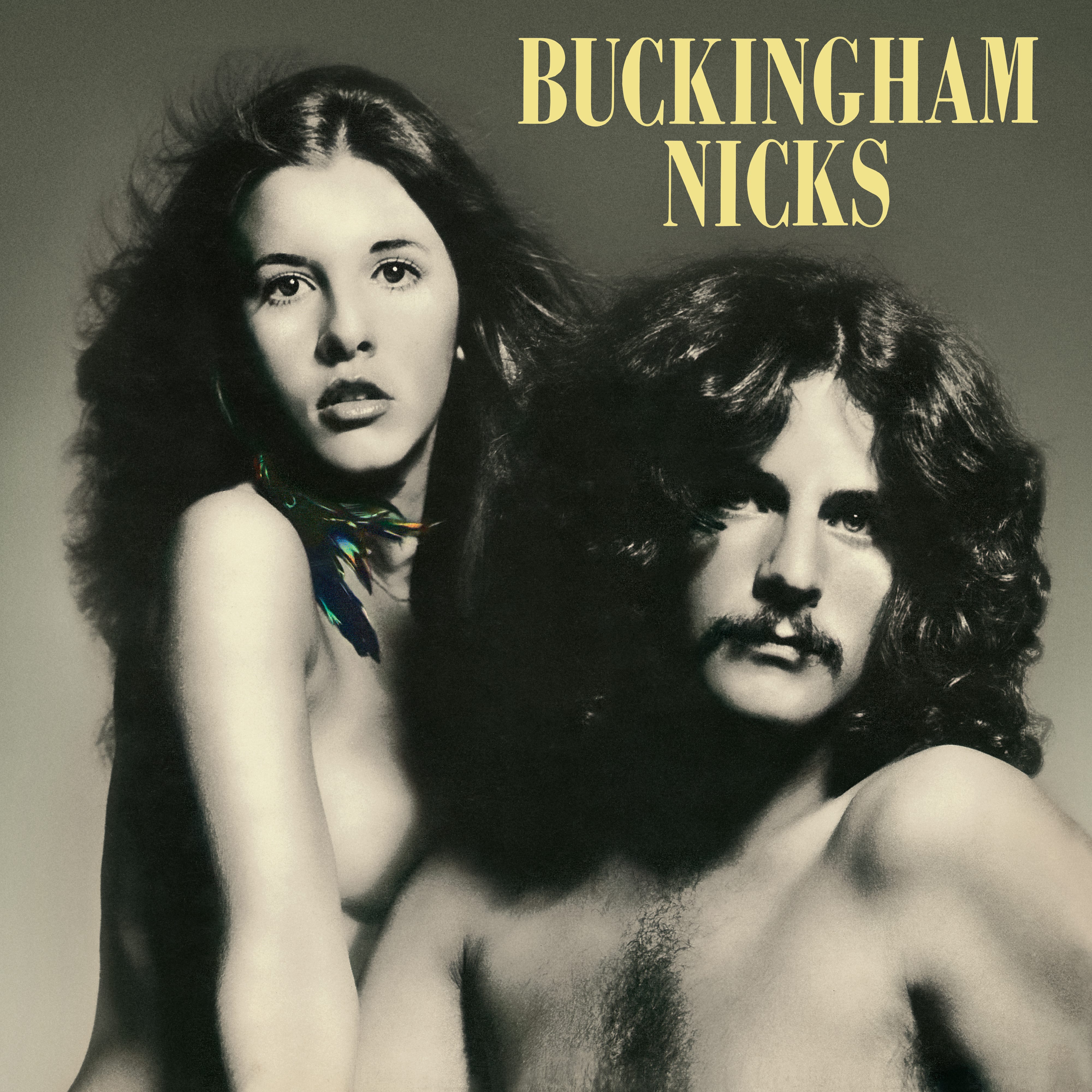
Buckingham Nicks—Buckingham Nicks [1973; 2025]
★★★★
The legend of Buckingham Nicks, the lone record released by Lindsey Buckingham and Stevie Nicks before joining Fleetwood Mac, looms so large it can overshadow the album itself. Long out of print—it never made it back to market during the heyday of CDs, a wrong that's finally rectified with this week's Rhino reissue (it's unadorned with bonus tracks and it sounds much cleaner and better than the needle drop bootleg I've had for years)—Buckingham Nicks is often positioned as a prologue to the real Fleetwood Mac story. Its scarcity suggested that it could easily be skipped; if it could stand on its own merits, it'd find its way back into circulation.
Nothing with Fleetwood Mac is ever that simple, of course. Buckingham Nicks remained in the vaults due to a combination of backstage drama and "inertia," as Lindsey Buckingham characterized it to Uncut way back in 2011. The album's fate became an afterthought amid the turmoil surrounding Buckingham's dismissal from Fleetwood Mac in 2018 yet, for whatever reason, tensions have thawed enough to allow for Buckingham Nicks to receive a reissue just in time for its 52nd birthday.
Very few people heard Buckingham Nicks upon its original release in the fall of 1973. Polydor, the duo's label, didn't invest in the way of promotion and without that support, there was no way for this deliberately commercial music to find an audience. It did make its way to one crucial listener. Keith Olsen, the producer of Buckingham Nicks and the duo's biggest booster within the music industry, played the album for Mick Fleetwood when the drummer was auditioning recording studios. He immediately fell for the blend of burnished folk-rock and sunkissed pop, hiring the duo to fill the absence left by Bob Welch.
There are a few threads tying together Buckingham Nicks and Fleetwood Mac, the first album the band made with the duo. "Frozen Love," the epic that closes the '73 LP, hints at the roiling melodrama that surfaced on "World Turning" and would later come to fruition on "The Chain." Both records share "Crystal," a delicate tune whose minor key skirts the edges of sadness. The difference between the two versions is instructive. On Fleetwood Mac, "Crystal" is laden with texture and underpinned by the assured thump of Fleetwood. Here, Buckingham and Nicks are given full studio support yet feel as if they're singing to each other: the focus is entirely on the shared bond between the two vocalists.
That intimacy is also evident in Buckingham's instrumental support of Nicks, where he gives her keening melodies a precise, plucked backing. There's electric guitar here, notably during the extended climax of "Frozen Love," but the acoustic guitar dominates, so much so that Lindsey is given two instrumental showcases for his fingerpicking: a fleeting rendition of John Lewis's "Django," plus the still, sparkling "Stephanie." Moreover, Buckingham Nicks feels folky in the way that so many albums of the early 1970s do. It is a collection of tender, introspective moments, softly strummed and sweetly harmonized; it's music for the dawn or dusk, a soundtrack for the moment when the day starts to shed its skin.
Fittingly, there are a couple of cuts from both Buckingham and Nicks that do feel like the beginning of something new. In addition to "Frozen Love," one of a handful of co-compositions between Buckingham and Nicks, Stevie's "Crying in the Night" builds upon its insistent melody, turning into a pristine example of high-end studio craft, while "Don't Let Me Down Again" gallops forth like "Monday Morning," hinting that the frenzy Lindsey achieved in his power-pop. In these passages, it's possible to hear the birth of Fleetwood Mac, yet the album's charm lies in how it's a snapshot of a specific moment. Deep in the process of discovering their voices, Buckingham and Nicks are earnest in their emotions and attention to musical detail, crafting an album whose hazy beauty remains fetching years later.
And “Stephanie”!
Great piece, was hoping to see your take on this.